Why Manufacturing Method Matters for Your Flat Roof
Calendering vs Extrusion — Why FlexiProof only supplies extruded EPDM
Not all EPDM membranes are made the same way. Two fundamentally different manufacturing processes are used in the industry; calendering and extrusion. The method used has a direct bearing on the quality, consistency and long-term performance of the membrane you install.
FlexiProof supplies EPDM membranes manufactured using the extrusion process. This is the more advanced of the two manufacturing methods. It’s the process that delivers a consistently superior result. Here’s what that means in practice.
What extrusion means for your roof — The FlexiProof advantage
FlexiProof supplies membranes manufactured by extrusion. Here’s the practical difference compared to calendered membranes:
Uniform thickness every time
Extrusion produces consistent membrane thickness across the full sheet. No thin spots, no pinholes — the membrane performs identically at every point.
No air pockets or surface defects
Controlled rubber flow through the extrusion die eliminates the air entrapment and dimpling that can occur in the rolling banks used in calendering.
Precise temperature control. No scorching
Multiple temperature zones in the extruder keep the rubber at the optimal temperature throughout — preventing the localised scorching or pre-curing that can weaken calendered membranes.
| Extrusion (FlexiProof) | Calendering (Other Suppliers) | |
| Thickness consistency | Precisely controlled — uniform across the full sheet | Can vary. Thin spots and pinholes possible |
| Air pockets / dimples | Eliminated by controlled flow through the extrusion die | Risk of air entrapment from rolling material banks |
| Temperature control | Multi-zone precision control. No overheating | Risk of localised scorching or premature curing |
| Surface quality | Smooth and consistent, so it’s easier to install and seal | More surface defects possible |
| Long-term performance | Higher. Fewer manufacturing defects means fewer failure points | Dependent on process consistency |
The Calendering Process
Calendering is a long-established method that works well for many applications. But it carries inherent limitations that can affect the consistency and long-term performance of EPDM roofing membranes.
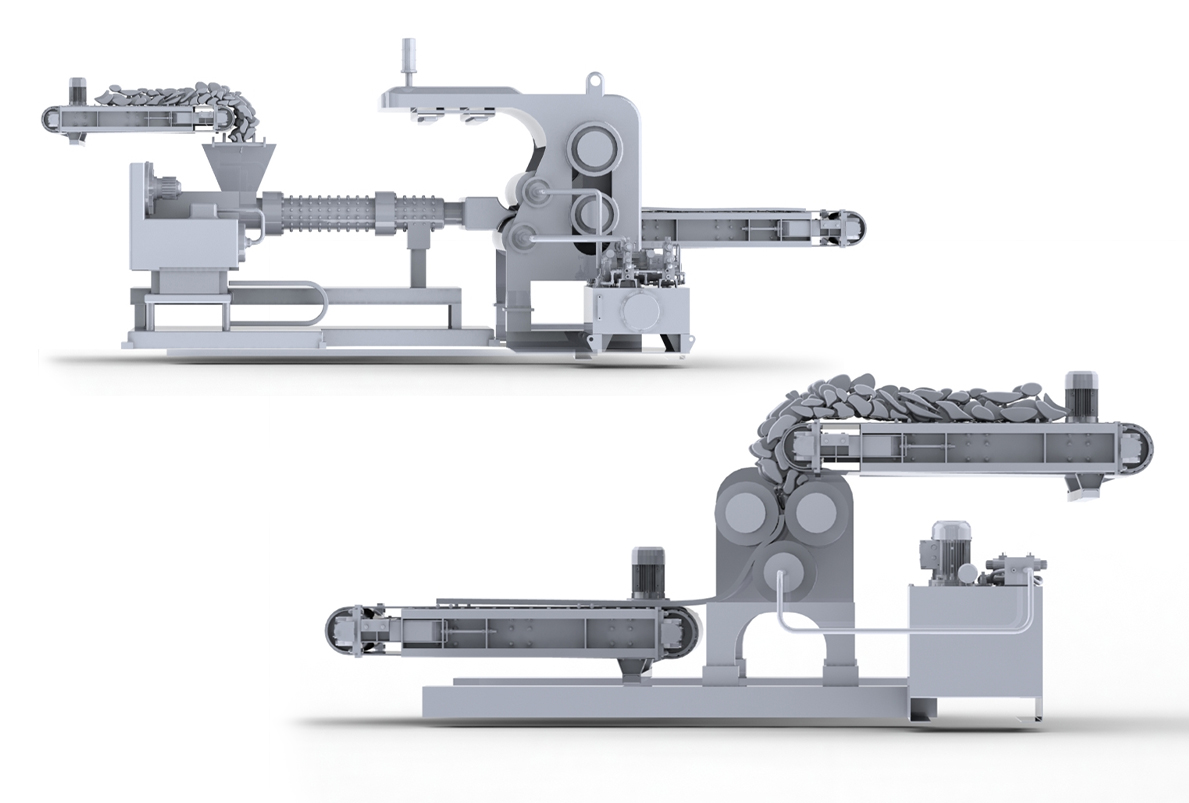
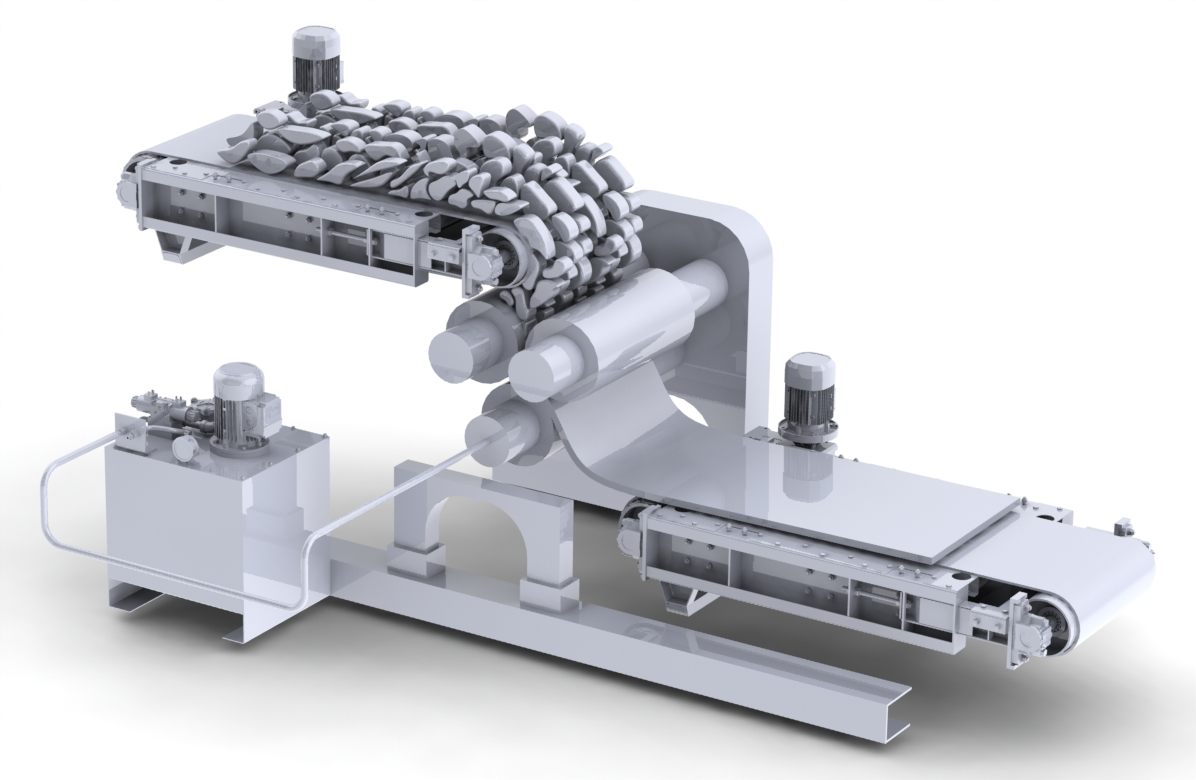
Calendering has been a key technique in the rubber industry for decades. The process heats and blends rubber polymers, then passes them through a series of large rollers to form a flat sheet.
The sheet’s thickness is controlled by adjusting the gap between rollers; once the desired thickness is achieved, the sheet is cured and prepared for installation.
The calendering process is well-established and, when conditions are controlled, capable of producing consistent sheets at scale. For decades it was the dominant method for manufacturing EPDM roofing membranes.
The limitations of calendering
Despite advances in calendering equipment, several inherent characteristics of the process create potential weak points in the finished membrane:
Inconsistencies in Thickness
Maintaining perfectly uniform thickness across a large sheet is challenging in calendaring. This is especially true with the thicker gauges typically used in roofing. As thickness increases, so does the risk of air entrapment within the sheet, creating bubbles or weak spots. Thinner sheets are prone to pinholes and voids that can compromise waterproofing performance.
Air Pockets and Surface
Dimples
The rolling material banks used to maintain rubber flow in the calendering process can introduce air pockets or surface inconsistencies into the finished sheet. These defects are difficult to detect during manufacture and can become points of weakness or failure over time.
Scorching and Premature Curing
Uneven temperature distribution, particularly in the large, heat-retaining rolling banks, can cause localised overheating. This leads to scorching (localised burning of the rubber compound) or premature partial curing. Either outcome creates inconsistency in the finished membrane’s physical properties.
The Extrusion Process — How FlexiProof Membranes Are Made
Extrusion gives far greater control over every stage of membrane production. This produces a more consistent, defect-free, and aesthetically superior membrane that installs more easily and performs better over the long term.
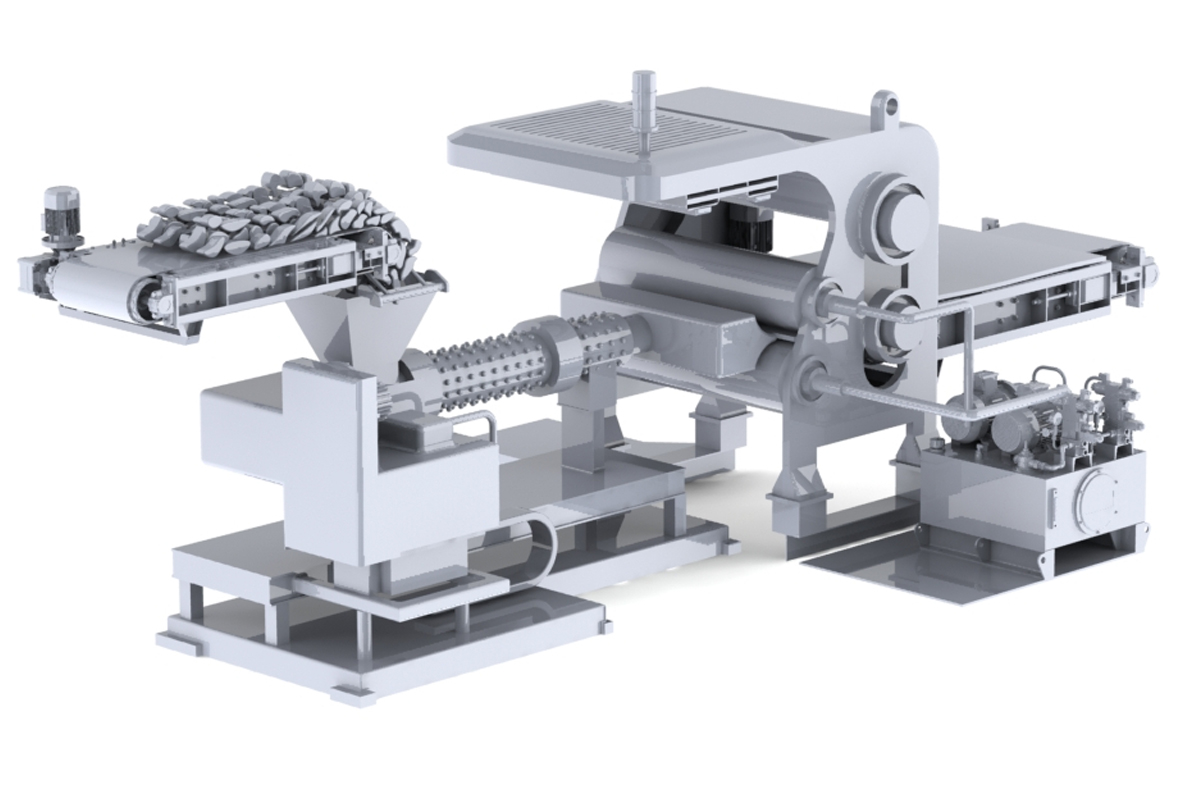
All FlexiProof EPDM membranes are manufactured using the extrusion process. In extrusion, rubber compound (in pellet or slab form) is fed into a machine that heats, blends and forces it through a precision-engineered die.
This produces a continuous sheet with precisely controlled thickness and composition.
Why extrusion produces a better membrane
Uniform thickness
The extrusion die and screw speed are precisely calibrated to produce a membrane of consistent thickness across the full width and length of the sheet. This is true even at wider widths, where calendering struggles most. This eliminates the pinholes, voids, and thin spots that can occur in calendered membranes. The result: complete, reliable waterproofing coverage at every point.
Precise temperature management
Multiple temperature-controlled zones run along the length of the extrusion barrel, keeping the rubber compound at its optimal processing temperature throughout. This prevents both the premature curing and the localised scorching that can occur when rubber is overheated in calendering’s rolling banks. This results in a membrane that is consistent in its physical properties from end to end.
Elimination of air pockets and surface defects
Because the rubber moves in a controlled, continuous flow through the extrusion die, rather than through the large, open rolling banks of calendaring, there is no way for air to become trapped. The membrane surface is smoother, dimple-free, and consistent. For installers, this means better adhesive contact, cleaner seam lines, and a better-looking finished roof.
Superior dimensional consistency for wider sheets
FlexiProof supplies membranes in widths up to 15.24m (One Piece). These are the dimensions where the advantages of extrusion are most evident. Wider sheets mean fewer seams, fewer potential leak points, and faster installation. That’s only achievable at these dimensions because of the precision that extrusion delivers.
The bottom line: extrusion sets the standard — and FlexiProof leads it
The choice of manufacturing process determines the quality of the membrane that ends up on your customer’s roof. A membrane with air pockets, thickness variation or surface defects is a membrane with weak points. Over a 20-50 year lifespan, those weak points matter.
Extrusion eliminates those weak points. FlexiProof supplies EPDM to a specification certified by many independent bodies, making it the highest-quality extruded EPDM roofing membrane available in the UK market.
For merchants, that means a product you can stock and sell with complete confidence. For roofers and installers, it means a membrane that goes on correctly, looks right and stays watertight.
Extruded EPDM is the right choice for flat roofing — and FlexiProof sets the standard for extruded EPDM in the UK. Every FlexiProof membrane carries the manufacturing qualities, certifications and accreditations that make a real difference to flat roof project success.


Premium Extruded EPDM.
Fast & Safe Installation.
Long Term Success.

Superior Extruded EPDM.
Fast & Safe Installation.
Long Term Success.

Solid & Cellular uPVC Extrusions.
Fast & Safe Installation.
Long Term Success.